James Balog on Extreme Photo Projects

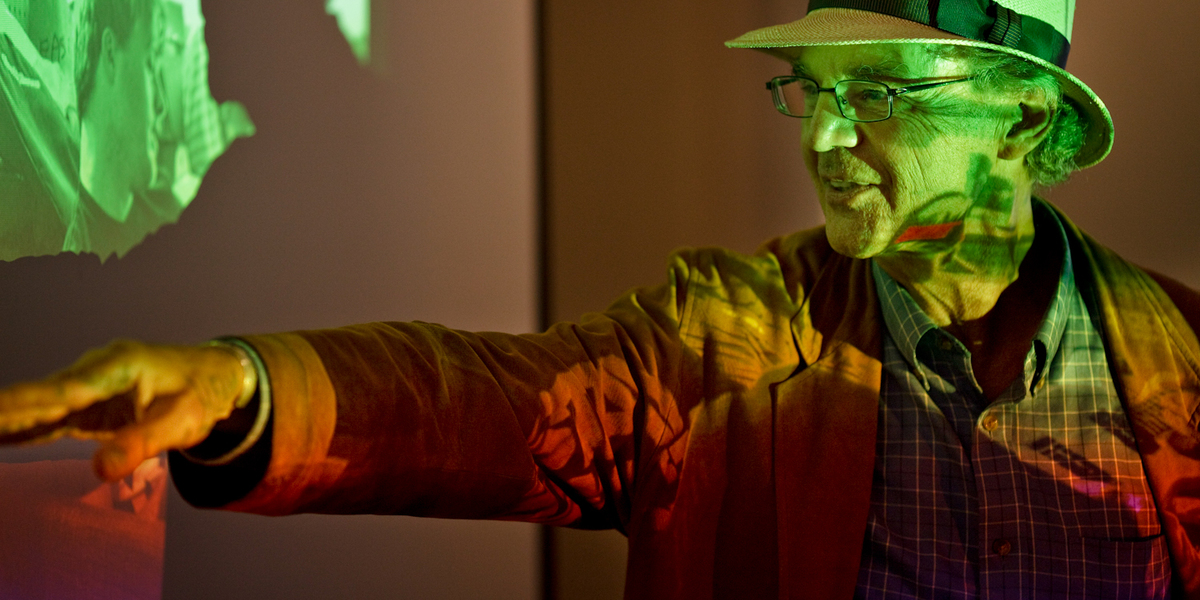
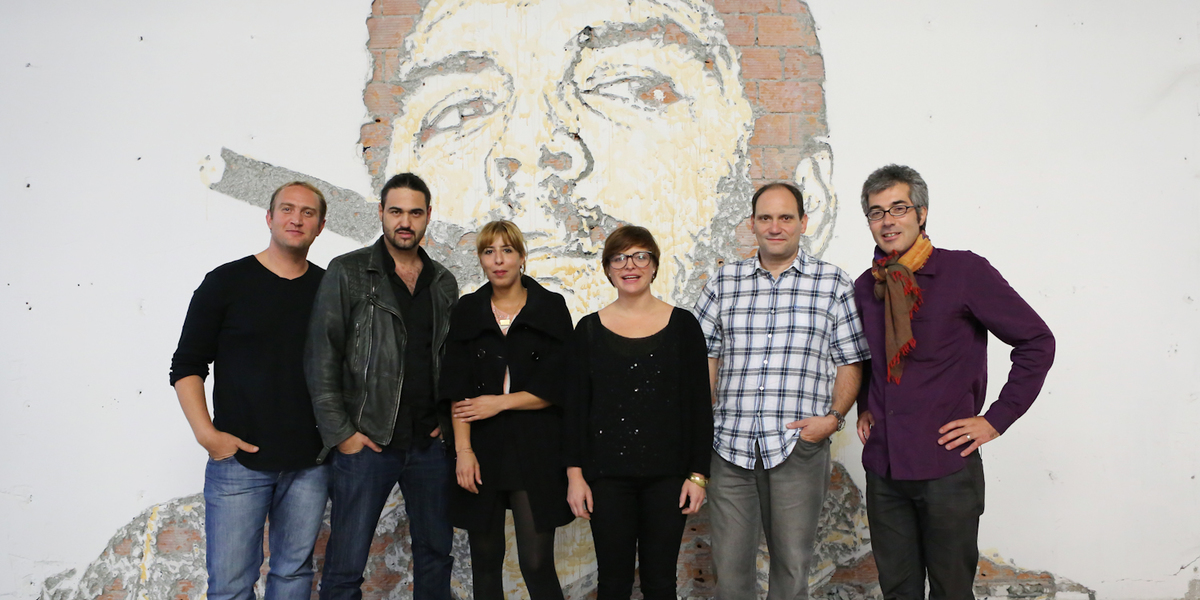
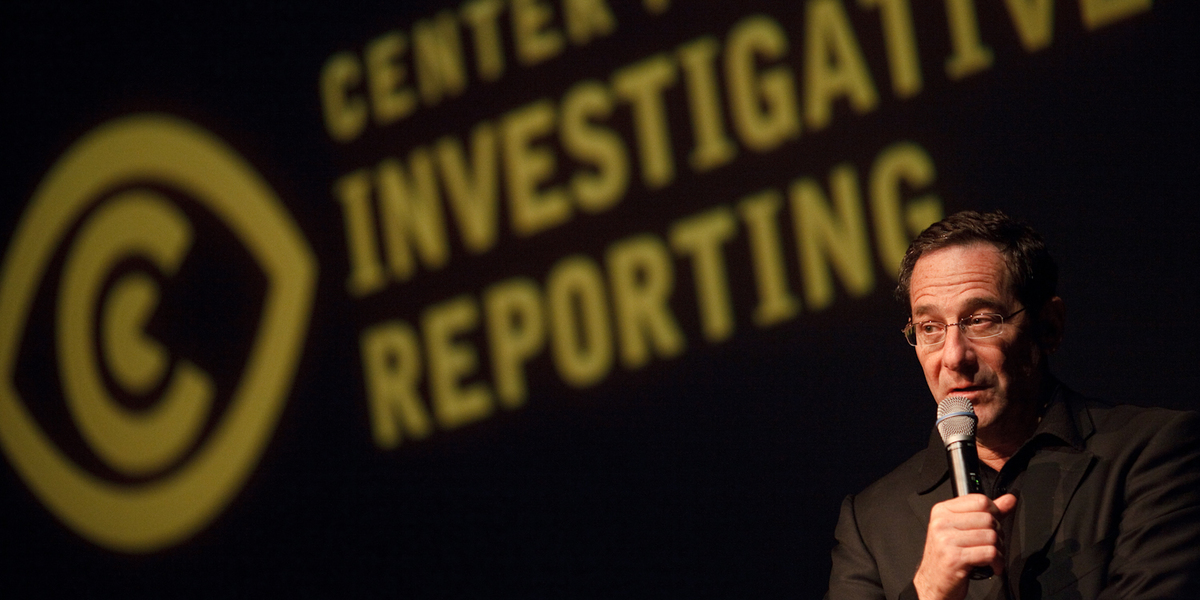
Open Show co-founder Tim Wagner recently interviewed photographer James Balog about his Extreme Ice Survey project documenting the world’s glacial terrain through cameras left in remote locales for long spans of time.


Tim: How was the idea for this project born?

James: In the course of shooting assignments on retreating glaciers for The New Yorker and National Geographic in 2005–06, I was stunned to see that extraordinary amounts of ice were vanishing with shocking speed. Ice that had taken centuries to form was disappearing in just a few years, months or even weeks. This was geologic-scale change happening not just in the dim past or distant future, but right here, right now, in our own time. These observations were the catalyst for the Extreme Ice Survey.


Tim:
What were the biggest technical challenges in making this project?
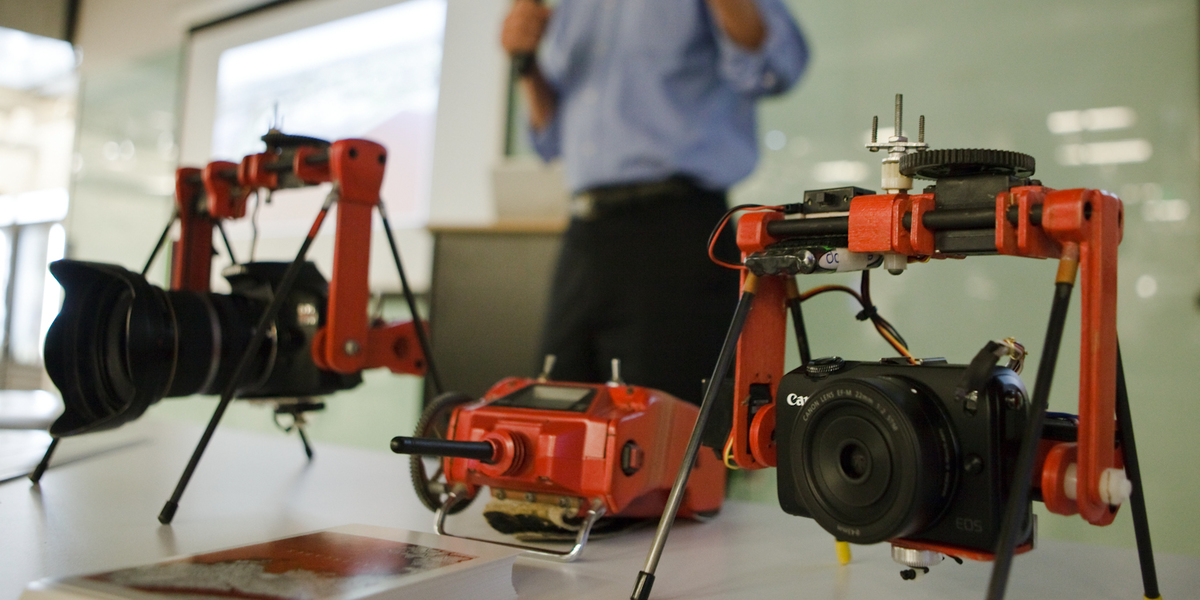
James: It took six months of experimenting to come up with a camera system sturdy and reliable enough for our purpose.Our custom-designed time-lapse cameras have to function in and withstand temperatures down to minus 40 F., deep snow, winds to 160 miles per hour, torrential rain and rock fall. Some camera locations are so remote that EIS team members were probably the first people to ever visit the sites.

 Tim: Any advice for people interested in covering climate change?
James: No modern-day conservation crusade is complete without elegant photographs to advertise the natural world to a distracted public. The conservationist impulse has long been embedded in American photography.

Imagemakers are the eyes of civilization—discovering, framing, and interpreting reality—and we can play a major role in shaping how humanity perceives and responds to the world around us. Consumers respond to beauty, and certainly many photographers celebrate nature’s beauty. But people need to be provoked, stimulated, and challenged, so there is room for tremendous experimentation and creativity by photographers in the pursuit of meaning and impact.

However, it has to come from your core. It’s a deep biochemical, psychological, philosophical thing. You need good communication skills. You have to know how to tell stories in a meaningful way.


Tim: What is the next project you are working on?

James: We did some work down in the Gulf after the oil spill. I’d like to do more with energy supply, as my grandfather died in a coal mining accident before I was born. We are documenting changes in forests in the Rocky Mountains due to beetle kill, and, I am working energetically to get the ice project as stable as possible. It has become painfully evident that we are creating a major historical document. I feel a great obligation to preserve a pictorial memory of these vanishing landscapes for the people of the future.


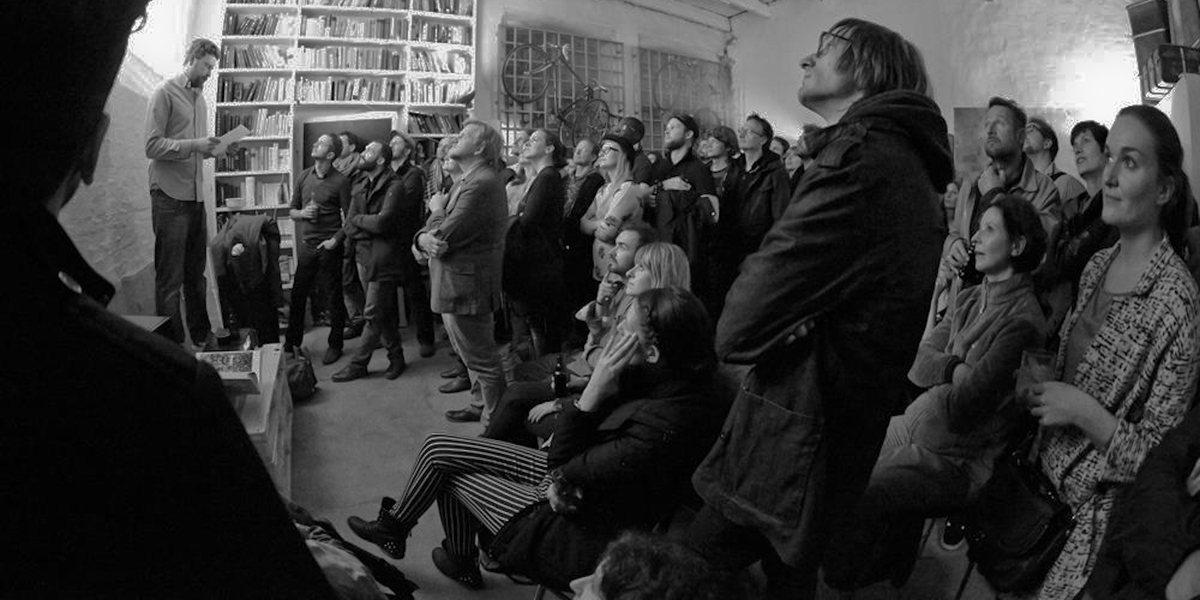
Meet and talk with James at the San Francisco International Film Festival and Open Show screening of Chasing Ice on May 3rd (Thursday) 2012 at the Sundance Kabuki Cinema for one night only. The film follows his epic Artic quest and takes viewers to breathtaking landscapes that may never again be seen by human eyes.

Buy seats to this film and post-screening Q&A >>

Posted in Photography | Leave a comment

What’ll It Take?

Video is such a new medium. It can only get better. It’s great to see a project like this where the focus is on a really interesting idea rather than sheer technical prowess, though the editing here is no joke.

Posted in Multimedia | Tagged | Leave a comment

PressPausePlay

Check out PressPausePlay, a look at what the digital revolution has done for art-making. The filmmakers focus on music and film, but all of what they say is directly applicable to photography.

Before you could sell a record for $10 or $16.98 as a CD because there was still this inherent mystery about how it was done, who did it, and how can I do that thing. Well now, that mystery has dissolved because I can make it, anybody can make it. They know the secrets now.

- Hank Shocklee

Almost everybody I meet in the world of art, music, literature, creative expression – everybody’s equally excited and afraid. No one is really knows where their next paycheck is coming from but they’re really excited at their ability to create work and communicate.

- Moby

Posted in Multimedia, Technology | Tagged , | Leave a comment

How tintypes are made

George Eastman house has made a video illustrating how old Civil War era tintypes are made. (via PetaPixel)

Posted in Technology | Tagged | Leave a comment

How to Do Collaborative Photography Right – Open Show @ SXSW

Photo by Tim Wagner (twagnerimages.com)Photo by Tim Wagner (twagnerimages.com)


Open Show recently sat down with former senior editor for American Photo Magazine and photo consultant Miki Johnson to talk about the movement towards collaborative projects, how to get there and Open Show’s joint project with RingReef to hold a first ever collaborative photo contest at SXSW this year (Mar.9-15).

Q: Why is collaboration important for today’s creative professionals?
I’ll give you an example from the photo world, since that’s what I’m most familiar with. Ten years ago, if you were a photojournalist, you worked for a newspaper or magazine, you got assigned photos, you took them, developed them, captioned then, and then took more photos. Now, if you’re a photojournalist (and there are fewer every day), you are working for yourself, so you’re managing your website, marketing yourself, doing the accounting, and you’re also expected to do video, multimedia slideshows, sound, and probably some web design.

No one can do that many things wonderfully, so I see this is an unsustainable situation, especially for creative types, who need more unstructured time to actually be creative. The way to make this work, I think, is to work with people who specialize in marketing, sound, design, web, etc. But self-employed creatives can’t afford to employ all those people full-time, so they need to be able to build flexible, mutually beneficial partnerships with them—what I would call “collaborative teams.”

Q: What skills should creatives focus on to make their collaborations more successful?
I generally break collaborative skills into five sections: knowing what you know, knowing what you need, setting goals, communicating effectively, and learning from experience. The first one might be the most important, yet people are most likely to skip it. Creatives should start by thinking about what collaboration is really going to mean: In most instances, you are giving up an amount of control in exchange for someone else taking on responsibilities, sharing their skills, and decreasing the time required from you. One way to get comfortable with giving up some control is to think about what you bring to the table and then what you know will be better for someone else to take over, which will hopefully decrease your urge to micromanage them.

The second most important thing is to verbally, or in writing even, establish goals, deadlines, and measures of success with your collaborators. Finally, agree on times and ways to communicate regularly about your shared project, including a debrief when it’s completed to celebrate what went well and discuss how you can improve next time.

Photo by Tim Wagner (twagnerimages.com)Photo by Tim Wagner (twagnerimages.com)


Q: And you’re doing something at SXSW this year about collaboration?
Yes, SXSW decided to do a PhotoCamp for the first time this year, since they recognize that there is a big overlap between the photography and interactive worlds (not to mention film and music). The idea is to create a space where anyone who is enthusiastic about photography can connect with other enthusiasts, from pros to Instagram celebrities (at Palm Door on March 12th).

With such a wide range of skills and interests, I’m staying away from traditional “how-to” stype stuff, and focusing on collaboration. Anyone is encouraged to stop in and fill out a quick questionnaire to determine “what kind of collaborator you are,” then we’ll help them find others who they might work well with. We’ll also provide quick collaborative projects people can do at SXSW with their smartphones, and tips on making the project successful. If they want to take their collaboration to the next level, they can even enter the RingReef “SXSW Through Your Eyes” contest, which I’m judging.

Q: How is this different than a normal photo contest?
Most photo contests focus on a single vision from one photographer. RingReef is a smartphone app that lets you easily share text and photos with a group, a “reef,” that you set up. So it’s a perfect space for smartphone photographers to collaborate, on the go, and create a group vision entirely on their mobile devices. This is the first time RingReef has done this contest, and I always like things that are a little experimental, plus it lines up perfectly with my collaboration ideas. Basically, the winning teams will receive prizes for doing something they would be doing anyway—snapping and sharing photos of SXSW.

Q: What do you hope smartphone photographers will gain from this experience?
As I see it, we are on the cusp of a shift in digital technology. First we were all so excited to be able to share anything any time that we quickly overloaded ourselves and the digital universe. Now curation is really important; the most valuable services help filter stuff to you that will like so you don’t have to wade through overwhelming amounts of information.

But I notice that both of these things, sharing and curation, are still largely aimed at the single user with a single stream of information. I see things heading more and more toward converging information streams, especially around specific topics. Apps like RingReef are an indicator of that. And as we move into that next step, what I call the era of collaboration, it’s going to be increasingly important to be able to adapt your vision to different teams and audiences. I’m hoping PhotoCamp and the RingReef contest will give smartphone photographers an opportunity to learn to adapt in that way and to lead the evolution toward a more collaborative, and therefore contextualized, digital experience.

Posted in Photography | Leave a comment

Today’s levitation


Photographs by Yowayowa Camera Woman

Jump pictures taken to a whole new level!

Posted in Novelty | Tagged , | Leave a comment

Ira Glass on the creative process

“The thing I would like to say to you with all my heart is that everybody I know who does interesting creative work, they went through a phase of years where they had really good taste and they could tell what they were making wasn’t as good as they wanted it to be. Everybody goes through that… and the most important possible thing you can do is do a lot of work. Do a huge volume of work. Because it’s only by actually going through a volume of work that you’re actually going to catch up and close that gap.”

- Ira Glass

Posted in Multimedia | Tagged , | Leave a comment

What it takes to be a National Geographic photographer

So, what does it take to be a National Geographic photographer? As I have said, great photography, but also the photographer must possess the attributes of intellect, passion, maturity and drive.

Intellect is essential because the photographer shapes the story, and works independently of the writer, and to a great degree independent of direction from the picture editor. The photographer must be an intelligent, ethical, informed journalist.

Passion is an important attribute because without caring about the subject one cannot do their best creative work.

Maturity is another essential attribute. In the span of a single story a photographer may be working with slum-dwellers to a head of state. The photographer must have the maturity – the “salesmanship”, if you will – to convince this broad spectrum of individuals to give him or her access, and to allow him or her to do their photographic work.

In addition, the photographer must have the maturity and diplomacy to work within the editorial structure of the Magazine.

The amount of drive – just plain hard work – necessary to accomplish a National Geographic Magazine assignment cannot be overstressed. I have often said that I would rather have a photographer whose eye was not the best, but who worked very hard, rather than the person with the best eye in the world, and who was lazy.

- Kent Kobersteen via A Photo Editor

Posted in Tips & Tricks | Tagged | Leave a comment

A conversation with Brandon Tauszik


Photograph by Brandon Tauszik

Brandon Tauszik is a San Francisco based photographer originally from England. After learning the craft of photojournalism in Europe, and a stint at Invisible Children, a media based non-profit organization, he now assists Magnum photographer Jim Goldberg and co-founded Sprinkle Lab. His photos have been appeared in The Washington Post, The Houston Chronicle, The Chicago Sun-Times, NPR, Salon.com and GOOD Magazine, among many others. He was gracious enough to take some time to talk about his experiences as a photographer and Pray For Mercy, his recent project about Family Radio and Judgment Day.

When did you initially pick up a camera? What was your first memorable photographic experience?

I purchased my first cell phone at 15 years old. It had a little 1 megapixel camera on it and soon enough I was hooked. The fact that I could be anywhere at anytime and capture what was around me was thrilling. Eventually I moved on to borrowing my friends’ point-and-shoot cameras. After an evening of sneaking into someone’s hot-tub or going to a punk show, I would usually fill up someone else’s memory card with photographs.

How did you learn photography and was there anything about that experience that you would change?

After I finished high-school in 2005 I decided I wanted to be a photographer, so I saved up my money for a year and then went to Europe. I spent the next 2 years (on and off) backpacking alone through the Balkans and working here and there. These experiences made me who I am today and grounded me in a desire to photograph unfamiliar places and people.

I suppose you could say I’m entirely self-taught and I wouldn’t change that. I don’t have beef with photo schools, but if you can’t get out of bed and be a photographer without a professor requiring you to be a photographer, you probably won’t get too far.

What was the process of teaching yourself like? Was any part of it particularly easy or difficult? When did you begin to consider yourself a professional?

I think the process of becoming a skilled “self-taught” photographer will be more arduous and time consuming than relying on college to refine your skills. For the large part, you have to be your own motivator and toughest critic. However, there’s never been a better time to educate yourself with the vast amount of quality educational content online. If you have an idea that interests you, do some research and assign yourself to shoot it. If that doesn’t pan out, find another idea and shoot that. Critique your work or show it to others and repeat. I’m not concerned with considering myself to be a “professional” photographer and I still have so much to learn. There’s always more to learn.


Photograph by Brandon Tauszik

You mentioned that you assist Jim Goldberg. How has that been?

For his age he still works incredibly hard and has serious hustle. It’s intriguing to watch him straddle the worlds of fine art and reportage. I primarily work on web design and video projects.

Which world would you place yourself in, art or reportage? Is the distinction meaningful at all?

My goal is to end up somewhere in between or outside of the two. I think this notion is relatively new in the world of photography and it’s exciting to see where it ends up. With all this technology affecting visual media so directly, we’re seeing previously concrete distinctions turned on their head. It’s becoming more and more common for a photojournalist to be represented by a gallery, or a fine art photographer to be found working in a war zone. I think it’s becoming less about these distinctions and more about the depth and quality of one’s work.

Why did you choose to assist another photographer vs freelancing on your own?

I don’t feel that freelancing is what I need right now. I want to focus on developing my skill-sets as a “people person” and visual communicator, rather than make a buck off a newspaper gig. Pursuing long-term projects on issues that genuinely interest me have been remarkably enriching experiences.


Photograph by Brandon Tauszik

Tell us about Pray For Mercy and Harold Camping – how you found this story and what you find compelling about it.

Family Radio paid for a slew of billboard spots all over America, as well as in many other countries around the world. The billboards boldly proclaimed the eminent destruction of humanity, with a setting sun behind a silhouetted man praying. I was fascinated by all of this and when I discovered that Family Radio, Harold Camping, and his local congregation we all located 20 minutes from my house I knew I had to go hang out with them.

It seemed very easy for the media to dismiss him as “crazy”, talking about vanishing Christians and eternal fiery damnation, but 41% of Americans believe what Camping believes will happen at some point in time. So where was the lunacy? In the fact that he set a date? I feel like a large number of Americans began to privately ask themselves some tough questions, while ridiculing Camping and his followers.

How have you been received by the EDIT congregation?

Overall I was surprisingly well received by Mr. Camping and the congregation. I would sit and listen during the sermon, join in group conversations after the service, and partake in the afternoon potluck. My presence as a photographer and documentarian was obvious, but largely ignored.


Photograph by Brandon Tauszik

As the first rapture date approached, the perception of the event from within the church and by the general public were very different. Were members of the congregation aware of the incredulity of outsiders? Were they shielded from it?

They were in no way shielded from the messages in the press and definitely knew what the general public thought of them. That didn’t seem to factor in to their own outlook though. From what I witnessed, pride played a big part in their collective mentality. The whole “we’re so right, they’re so wrong” conversations were commonplace.

Did the congregation have different views about the skepticism in the media and by the public at large after the second date passed without incident?

Again, they knew what was being said but that was of little concern to them. Their faith in Camping’s word was pretty infallible and most people I spoke with just found different ways to rationalize what was (not) happening.

Both dates passed without incident. Is Camping’s congregation still intact? How have members responded to this turn of events?

Family Radio and Camping’s congregation are still intact, to varying degrees. It’s very difficult to get a factual exposé on the direction and financial situation of Family Radio, however they have sold off some of their stations around the country, each worth millions of dollars. They are still broadcasting daily.

Before May 21st, attendance at Camping’s local congregation averaged well over 100 people. Despite the fact that he hasn’t attended or spoken to his congregation since June, dozens of people still show up every Sunday morning. Attendance on October 22nd was lower than normal, but not by as much as one would expect. The whole service that day was about Camping’s predictions, and about how to move forward since the second date didn’t happen. Everybody was discussing and trying to get to the bottom of it; figuring out where they went wrong, where Camping went wrong.


Photograph by Brandon Tauszik

How has Camping responded?

I managed to speak with Camping at his home on October 16th, a week before the world was supposed to end. Among other things, he told me that “no one knows exactly when the world will end” and asserted doubts in what he had interpreted from the Bible. This was the first time his had expressed apprehensions like this. He also told me that he had “retired”.

Has working on Pray For Mercy been different than working on your other projects?

It was in the sense that it had a timeline on it. There was a group of people following a leader preparing for a specific date. After that date, the dynamic of the the story changed and I couldn’t revise what I’d previously shot. While shooting I had to try and prepare for where the story would head and make sure I had sufficient images that would link the story together. I have a ton of unpublished images from after May 21st that I haven’t used yet. Maybe I’ll wait for the gallery show, any curators reading this?

What are you working on currently? Any future projects we can look forward to?

I’m currently working on a project which explores barber shop culture in Oakland. I’ve never seen a place with so many barber shops, sometimes two to a block, all independent and thriving. I have been visiting as many of these as I can, where I interview and photograph the barbers themselves. The shops are hubs of community, gossip, and wisdom; each one with a deep history in the area.


Photograph by Brandon Tauszik

In terms of photography, what inspires you at the moment? Have you seen any notable projects or single photos recently?

I’m always searching for new work… Lately Shawn Nee, Chantal Heijnen, and Kuba Rubaj are making me smile.

Any advice for young/emerging photographers?

As far as documentary and reportage work is concerned; If you’re not good with people, stop shooting and work on that now. It’s just as important as refining your image making skills, except you wont make the images if you don’t click with your subjects first. You require of someone a certain amount of emotional access in order to willfully make a picture of them. This is always a challenge for me as I’m a pretty introverted person, but I’ve worked hard to become more “open” to the people I photograph. I don’t want my images to feel detached or removed, but rather close and personal.

How do you see your future in the business now with the digital boom and the change in publishing?

I’m happy to be alive and kicking at this time in photo history! There’s near unlimited possibilities with new avenues of distribution and emerging technologies. For example, as a relatively unknown photographer my portfolio website was receiving 30,000 hits a day around May 21st because of my photo-essay. That’s more exposure than any small book run or gallery show could yield… and for free.

Now, was I able to monetize on all that traffic? Yes I sold photos to a few publications, but the rates I received were a real wake-up call to the realization that I can’t come close to supporting myself with my photo projects, however “newsworthy” they are. I’m not interested in weddings or corporate work, so my dream of making my entire income from photography has changed; but we need all need to adapt when necessary. Earlier this year I co-founded Sprinkle Lab, a commercial video firm which has allowed me to continue shooting projects of personal interest and forget about monetizing for the time being.

I’m not sure what will come of this huge transition from print to web, but I think it’ll be OK in the end. Our culture is becoming exponentially more visual, so the demand for quality visual communicators will expand with that. I hope.

Out of curiosity, what profession do you think you’d be in if you weren’t a photographer/videographer?

An anthropologist.

Posted in Featured work, Photography | Tagged , , , | Leave a comment

A novel use of camera strobes

Japanese band Androp wins the award for most creative use of camera strobes in a music video. A giant array of strobes on cameras fire to in synchrony to spell out words and create patterns. Check it out!

Posted in Novelty | Tagged , | Leave a comment